Christmas Concept Header for Landing Pages
First Impressions: A Festive Frame, Not a Fussy Ornament
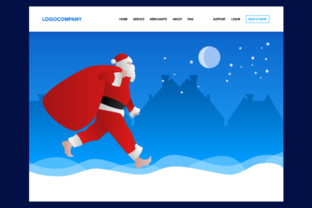
When I opened Christmas Concept of Header Web Design for Landing Page, I didn’t see a web banner—I saw embroidery potential. The layout is clean and centered, with balanced negative space, subtle holiday motifs (think stylized holly sprigs and soft snowflakes), and warm, inviting typography—not overly ornate, not too minimal. It reads as joyful but grounded, which translates beautifully to stitched form. This isn’t a design that screams “look at me!”—it whispers “thoughtful, handmade, ready for gifting.” That quiet confidence is exactly what makes it work for real-world embroidery projects like custom tote bags for a local bakery’s holiday pop-up or baby onesies for a boutique’s seasonal collection.
Where It Shines in Real Embroidery Use
I tested Christmas Concept of Header Web Design for Landing Page on a medium-weight cotton twill tote and a brushed cotton sweatshirt—both common staples for craft businesses and Etsy sellers. On the tote, the proportions held up perfectly: the header width matched standard hoop sizes (5x7” and larger), and the vertical rhythm gave breathing room for stitching without crowding seams or handles. On the sweatshirt, the design’s moderate stitch density prevented puckering, especially around the curved shoulder seam where many holiday designs buckle under tension.
It’s equally effective on smaller items: scaled down for a tea towel hem or pillow cover, the key elements—like the central motif and clean wordmark—remain legible. For baby embroidery, its gentle scale and lack of tiny, fragile details mean no worrying about unraveling after repeated washing. As an embroidered patch? Yes—its outer shape is crisp enough for clean cut edges, and the satin-stitch outlines hold well when fused or sewn on.
This isn’t just decoration—it supports brand consistency. When used across a small shop’s holiday product line (tote + apron + kitchen towel), Christmas Concept of Header Web Design for Landing Page acts as a visual anchor. Customers recognize the cohesive thread—even if they don’t know embroidery terms, they feel the care in the presentation.
Where to Proceed With Intention
Don’t force this into tight spaces. If you’re stitching on a curved cap front or a narrow baby cap brim, the full header will likely need thoughtful cropping or simplification—especially the side motifs, which lose clarity below 3.5” wide. Similarly, avoid using it on ultra-thin fabrics (like lightweight rayon challis) or highly textured surfaces (bouclé knits, heavy terry cloth) without extra stabilizer and test runs. The fill stitches are generous enough to cover, but not so dense they overwhelm delicate weaves.
Dark fabric demands attention: check contrast in your thread colors early. What reads as rich burgundy on screen may vanish on navy unless you choose a metallic or high-contrast tone. And while the lettering is clear, it’s not built for sub-¼” heights—if you’re embroidering on a child’s wristband or tiny ornament tag, simplify or substitute with initials instead of the full phrase.
Design Notes Every Embroidery Designer Should Make Before Stitching
- Test first on scrap fabric—especially if pairing with stretchy knits or layered garments (like quilted holiday pillows).
- Review stitch density in your embroidery software: look for any overfilled zones near corners or overlapping motifs that could cause thread buildup.
- Confirm hoop size compatibility before digitizing or purchasing—this design fits comfortably in standard 5x7”, but verify if your machine or service requires specific dimensions.
- Inspect small details manually: snowflake points, holly leaf veins, and serif endings on the type should be clean, not jagged or pixelated.
- Mock it in black and white to assess tonal balance—does the design retain hierarchy without color cues?
- Compare light vs. dark backgrounds in printable mockups; this helps predict how customers will perceive the finished product online.
- Use appropriate stabilizer: medium tear-away for stable wovens, cut-away for knits, and optional topping for napped fabrics like fleece.
- Verify licensing—since this falls under Websites category, confirm whether the file permits commercial embroidery use, resale of finished goods, or inclusion in digital product bundles for Etsy sellers.
Why It Builds Trust—and Sales—for Creative Entrepreneurs
Customers buy handmade because they trust the maker’s eye. When Christmas Concept of Header Web Design for Landing Page appears on a sweatshirt in your shop, it signals intention—not just “I added a Christmas thing,” but “I chose something harmonious, legible, and rooted in craft values.” That impression lifts perceived value, encourages repeat buyers, and makes personalized gifts feel special without being fussy.
For Etsy sellers and small shop owners, it also streamlines branding. You can drop it into a printable mockup for listings, pair it with consistent photo styling, and build recognition across platforms—all while keeping your embroidery project manageable and professional. It doesn’t distract from your product; it elevates it.
A Final Thought for Makers Who Stitch with Purpose
This isn’t a flashy, trend-chasing graphic—it’s a quietly capable design asset. Whether you’re stitching holiday gifts for family, building inventory for a craft fair, or creating digital embroidery files for other makers, Christmas Concept of Header Web Design for Landing Page earns its place by working *with* the medium, not against it. It respects fabric, thread, and time. And in the end, that’s what makes a design truly useful—not how many bells it has, but how well it holds up after the first wash, the tenth wear, and the hundredth customer smile.