Reindeer Embell Clipart: Festive Illustrations for Real Design Work
As a graphic designer who’s built brand identities for handmade businesses, launched seasonal product lines for Etsy sellers, and crafted packaging for local craft fairs, I recently evaluated Reindeer Embell Clipart for a client project: a limited-edition holiday candle collection from a small-batch apothecary brand. The goal was warm, nostalgic, but not kitschy—think hand-poured soy wax, kraft labels, linen tags, and Instagram storytelling that feels intimate and intentional. That’s where this asset came in—not as filler, but as a considered visual anchor.
A First Impression That Sets the Tone
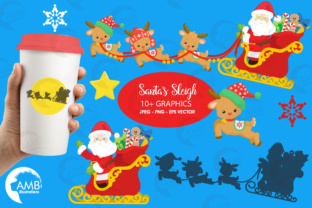
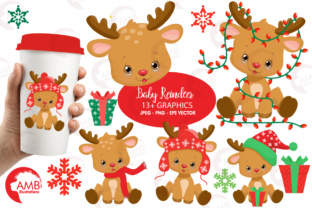
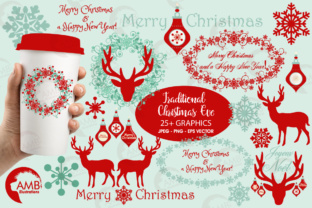
The Reindeer Embell Clipart delivers immediate seasonal warmth without leaning into cartoonish cliché. These aren’t exaggerated, googly-eyed characters—they’re softly stylized, with gentle line work, subtle texture hints, and balanced negative space. The illustrations carry a quiet charm: slightly vintage-inspired but cleanly rendered, with organic flow and restrained detail. They evoke hand-drawn charm while maintaining digital precision—ideal for brands that value authenticity over polish.
Where It Shines in Client Projects
In practice, Reindeer Embell Clipart excels where emotional resonance matters more than technical complexity. For our candle client, we used it across multiple touchpoints:
- Packaging design: A single reindeer motif repeated subtly along the edge of a kraft label—elegant, not overwhelming.
- Social media graphics: Paired with serif typography on Pinterest pins and Instagram carousels to reinforce artisanal credibility.
- Printable design: Included in a downloadable holiday gift guide PDF—scaled beautifully at both full-page and thumbnail sizes.
- Cricut project: Cut cleanly from vinyl for custom jar toppers and reusable gift tags.
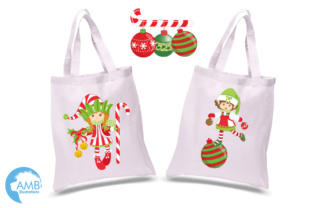
- Product mockup: Placed on mug and tote bag renders with natural shadowing—no pixelation, no jagged edges.
- Brand identity extension: Adapted as a supporting element (not the logo) in email headers, website banners, and holiday promo banners.
It also integrates smoothly into Canva templates, sublimation design workflows, and sticker design sheets—especially when layered with muted palettes or paired with neutral backgrounds. As part of a broader design bundle, it adds cohesion to themed collections without demanding visual dominance.
Where Caution Is Required
This isn’t a universal-fit graphic design asset. Its character-driven style means it should be used thoughtfully in contexts where tone alignment is critical. Avoid deploying Reindeer Embell Clipart in:
- Logo design—its illustrative nature lacks the scalability and abstraction needed for primary marks.
- Minimalist branding—it competes with clean layouts and risks diluting visual hierarchy.
- Professional corporate materials—annual reports, investor decks, or B2B presentations where seasonal whimsy undermines authority.
- Small sizes under 24px—fine antler details and delicate outlines lose clarity; test at actual usage scale before finalizing.
- Low-contrast or busy backgrounds—transparency works well on solid tones, but complex textures or photographic overlays can muddy its readability.
Design Impact Beyond Aesthetics
What makes Reindeer Embell Clipart effective isn’t just how it looks—it’s how it functions. In our candle campaign, it elevated visual hierarchy by guiding the eye toward key messaging without competing with copy. It strengthened brand consistency across platforms, acting as a unifying thread between web, print, and social. Most importantly, it increased audience engagement: customers tagged friends in comments like “This feels like my childhood winters”—a direct lift in emotional appeal that translated to higher click-throughs and repeat site visits.
That said, it doesn’t automatically confer professionalism—it depends on execution. Used carelessly, even beautiful illustrations can cheapen perception. Used intentionally, they deepen trust and recognition—especially for handmade business and small business branding audiences who respond to human-centered visuals.
Practical Designer Notes Before You Commit
If you’re evaluating Reindeer Embell Clipart for your next commercial design project, here’s what I tested—and recommend you do too:
- Test in black and white: Confirm legibility and contrast without color support.
- Preview on light and dark backgrounds: Verify PNG transparency holds up—no haloing or edge artifacts.
- Scale it down to 32px and up to 1200px: Check for distortion, stroke integrity, and detail retention.
- Place it on real mockups: Not just flat previews—see how it sits on textured paper, ceramic mugs, or fabric.
- Test print quality: Run a physical proof—some PNG design files don’t translate crisply to offset or DTG unless resolution and bleed are verified.
- Review file formats: Prefer SVG for scalable use in web design or Cricut projects; verify vector editability if you plan to recolor or adjust paths.
- Pair with typography: Try it beside serif fonts (for tradition), sans serifs (for balance), scripts (for warmth), and display fonts (for contrast)—note where harmony emerges.
- Confirm commercial licensing: Especially critical for Etsy product, print-on-demand, or client deliverables. Look for explicit permission for resale, merchandise, and digital distribution.
Final Verdict: A Thoughtful Creative Asset
Reindeer Embell Clipart isn’t flashy—but it’s reliable, evocative, and quietly versatile. It won’t solve every design problem, but for creative marketplace sellers, digital product creators, and designers building seasonal campaigns for authentic brands, it’s a smart addition to your toolkit. When aligned with purpose, audience, and execution discipline, it does more than decorate—it deepens connection. And in today’s saturated visual landscape, that’s not just nice to have. It’s necessary.