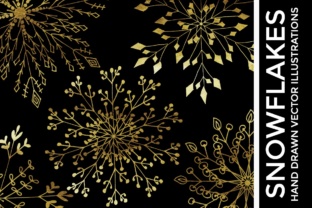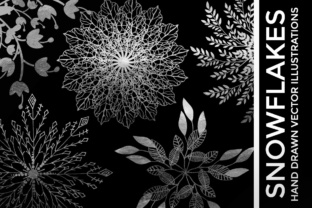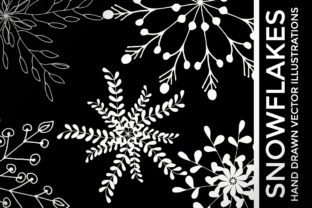
Snowflake Vector Bundle
A Designer’s First Glance: Delicate, Distinctive, and Ready for Real Fabric
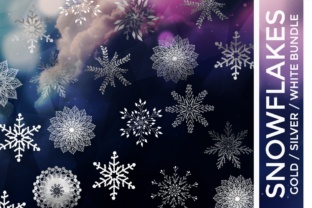
Opening the Snowflake Vector Bundle felt like flipping through a quiet winter sketchbook—no flash, no clutter, just clean geometry and thoughtful variation. As an embroidery designer who’s stitched hundreds of seasonal motifs, I immediately noticed how these illustrations balance intricacy with clarity. They’re not overly ornate, but they’re not generic either. Each snowflake carries its own rhythm: some lean minimalist with open negative space, others feature subtle radial symmetry that reads beautifully at 3–4 inches wide. This isn’t clipart—it’s illustration-grade vector work that translates well into stitchable form, especially for designers who value intention over ornament.
Where It Shines: From Tote Bags to Tiny Baby Onesies
Last week, I used one of the medium-sized snowflakes from the Snowflake Vector Bundle to embroider a linen tote for a local boutique’s holiday collection. Paired with soft heather gray thread on natural oat linen, it landed exactly as intended: refined, wintry, and quietly luxurious. That same design worked equally well on a lightweight cotton sweatshirt (using light tear-away stabilizer) and as a centered motif on a baby blanket hem—where its open structure prevented bulk and kept the fabric drape intact.
I also tested a smaller variant on a curved cap front. With careful hooping and a cutaway stabilizer, it held its shape without distortion. The clean lines and consistent line weight meant the satin stitch edges stayed crisp, and the fill stitches didn’t overwhelm the curve. For Etsy sellers or small shop owners building a cohesive holiday line, this bundle offers visual consistency across products—towels, pillow covers, aprons, even embroidered tea towels—without feeling repetitive.
Where to Pause: Texture, Scale, and Fabric Behavior
Not every snowflake in the bundle is built for every surface. The most detailed variants—those with fine interior branches or tight intersections—need breathing room. On stretchy fabrics like fleece or thin knits, those delicate arms can blur or pucker if stitch density isn’t adjusted. I’d avoid them on ribbed cuffs or curved hat brims unless you’re willing to digitize minor simplifications first.
Dark fabrics demand attention too. One of the more intricate snowflakes looked stunning in white thread on navy twill—but only after testing contrast on scrap. Without enough tonal separation, fine details vanish. And on textured surfaces like terry cloth or bouclé, the smallest motifs (under 1.5") lost definition; the running stitch outlines softened, and fill areas bled slightly into the pile. For baby embroidery or personalized gifts where softness and safety matter, stick to the mid-size designs with generous spacing—they stitch cleanly, wash well, and retain their charm after repeated laundering.
Real-World Impact: More Than Just Pretty Stitches
What makes the Snowflake Vector Bundle stand out isn’t just how it looks on screen—it’s how it behaves in the hands of customers. A customer who receives a handmade pillow cover with one of these snowflakes doesn’t just see decoration; they sense care in the spacing, confidence in the line work, and intention behind the scale. That perception lifts perceived value. For craft businesses and Etsy sellers, that translates directly to better reviews, repeat buyers, and stronger brand recognition—especially during holiday seasons when shoppers scroll fast and decide in seconds.
It also supports professionalism without demanding perfectionism. Because these are illustrations—not pre-digitized embroidery files—you retain full control over stitch type, density, and underlay. You can choose satin stitch for bold outer edges, running stitch for delicate accents, or fill stitch with reduced density for breathable baby items. That flexibility matters when your finished product needs to function as much as it needs to impress.
Practical Notes Every Embroidery Designer Should Keep Handy
- Always test on scrap fabric first—especially when pairing with textured, stretchy, or dark materials.
- Check thread color contrast early. A snowflake that sings in charcoal gray on ivory may disappear on black denim unless you boost stitch coverage or add a subtle outline.
- Review stitch density before scaling down. Tiny versions of dense designs can cause puckering or thread breakage on lightweight fabrics.
- Confirm hoop size compatibility. Some snowflakes span 4.5" wide—perfect for tote bags but tight for standard 4" hoops on caps or patches.
- Inspect small corners and branch tips. If digitizing yourself, ensure sharp angles aren’t oversimplified into rounded blobs.
- Test black-and-white mockups to assess silhouette strength—this reveals whether the design holds up when color isn’t doing the heavy lifting.
- Use proper stabilizer: light cutaway for knits, tear-away for stable wovens, and fusible + tear-away for sheer or slippery fabrics.
- Verify licensing terms before selling finished items or bundling the Snowflake Vector Bundle into your own digital embroidery file offerings. Since it’s categorized under Illustrations, confirm whether commercial use is permitted for both physical products and resale of digitized versions.
Final Thought: A Quietly Versatile Asset for Your Design Toolkit
The Snowflake Vector Bundle doesn’t shout—it invites. It fits naturally into custom apparel, holiday embroidery, nursery decor, and small-batch merchandise without leaning on trend-chasing gimmicks. For embroidery designers, craft business owners, and Etsy sellers building a recognizable aesthetic, it’s a reliable, adaptable foundation—not a one-season novelty. Whether you’re stitching a single personalized gift or producing 50 embroidered kitchen towels for a boutique launch, these illustrations hold their ground: legible, elegant, and built for real fabric, real machines, and real customers.