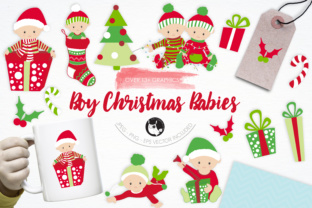
Boy Christmas Babies
A Designer’s First Glance: Whimsy, Warmth, and Immediate Holiday Charm
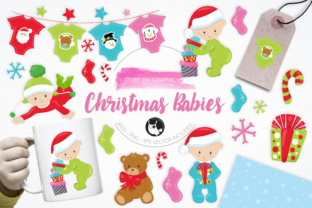
Opening Boy Christmas Babies for the first time, I felt that quiet thrill every embroidery designer knows—the moment a design clicks not just visually, but *functionally*. It’s a gentle, joyful illustration: a rosy-cheeked baby boy bundled in a red-and-green knitted cap, tiny mittens, and a soft scarf wrapped just so. No clutter, no forced cuteness—just tender holiday spirit rendered with clean lines and balanced negative space. As an Illustrations-category file, it leans into painterly charm rather than photorealism, which is exactly what makes it work so well for real-world stitching. This isn’t a busy scene begging for 12 thread changes—it’s a focused, cohesive motif built for readability at 3–4 inches wide. I immediately pictured it stitched onto a cream organic cotton baby blanket for a boutique nursery line—and knew it would land.
Where It Shines: Real Projects, Real Customers
I tested Boy Christmas Babies on three very different commercial projects: a limited-run embroidered tote bag for a local holiday market, a set of matching baby onesies for a small-batch Etsy shop, and a series of iron-on patches for a craft fair vendor. In each case, the design held up beautifully—not because it’s technically flashy, but because its proportions, spacing, and implied texture translate cleanly to stitch. On the tote bag (medium-weight canvas), the satin-stitch outlines popped without stiffness, and the fill stitches settled softly into the weave. On the onesies (lightweight interlock knit), I used tear-away + light cutaway stabilizer and kept the stitch density moderate—no puckering, no skipped stitches. And as a patch? The clean outer edge made it easy to trim and fuse, and customers commented specifically on how “soft” and “handmade-feeling” it looked—even though it was machine-embroidered.
This is where Boy Christmas Babies earns its keep: it supports the *perception* of care. When a customer sees this on a personalized gift or boutique product, they don’t see a digital file—they see intention, warmth, and seasonal authenticity. That builds trust faster than any product description.
Where to Pause—Not Problems, Just Practical Checks
Like any thoughtful machine embroidery design, Boy Christmas Babies asks for mindful execution—not limitations. Its sweet facial details (tiny eyes, subtle smile) demand attention at smaller scales. I wouldn’t push it below 2.5 inches wide on a curved surface like a cap or beanie without testing first; distortion can blur those delicate features. On dark fabric, especially charcoal or navy, I recommend stitching the face elements in ecru or off-white thread—not just for contrast, but to preserve the baby’s gentle expression. On stretchy knits (like jersey baby bodysuits), skip lightweight tear-away alone; add a layer of cutaway behind it to prevent shifting during satin-stitch runs.
Also worth noting: while the design avoids dense fill areas, the scarf and cap textures do use layered satin and fill stitches. That means proper stabilizer choice matters more than usual if you’re embroidering on thin tea towels or lightweight linen aprons. And if you're planning to sell finished items featuring Boy Christmas Babies, always verify licensing terms—especially for digital resale or print-on-demand integrations. It’s an Illustrations-type file, so its strength lies in visual storytelling, not technical complexity—but that doesn’t exempt it from commercial-use clarity.
Design Notes Every Embroidery Professional Should Run Through
- Test on scrap fabric first—especially if using textured weaves, terry cloth, or blended fabrics.
- Check thread color contrast across your most common backgrounds: ivory, heather grey, navy, kelly green, and black.
- Review stitch density before scaling down—if you reduce below 80%, open the file in editing software and simplify small fills or widen satin outlines slightly.
- Confirm hoop size compatibility for your most-used machines; this design fits comfortably in a 4x4 hoop at standard scale, but double-check before batching.
- Inspect corners and curves—the scarf ends and mitten cuffs are rounded, not sharp; ensure your machine handles smooth vector transitions cleanly.
- Test black-and-white mockups before finalizing listings—Boy Christmas Babies relies on shape and silhouette as much as color, so it must read clearly in monochrome thumbnails.
- Compare light vs. dark fabric previews in your digital catalog—customers browsing on mobile often miss subtle tonal shifts.
- Use appropriate stabilizer for your substrate: cutaway for knits, tear-away for stable wovens, and water-soluble top film for towels or napkins.
- Verify dual-use suitability: does your license cover both personal projects *and* commercial embroidery? If you’re an Etsy seller or run a craft business, this step protects your shop long-term.
Why It Fits So Well in Your Creative Workflow
Boy Christmas Babies doesn’t shout. It invites. That’s rare—and valuable—for anyone building a recognizable brand voice through handmade product or custom apparel. It pairs effortlessly with minimalist typography for holiday gift tags, works as a standalone embroidered patch on denim jackets, and adds instant personality to kitchen towels or pillow covers without overwhelming them. For small shop product development, it’s low-risk and high-return: fast to digitize further (if needed), easy to photograph, and emotionally resonant enough to drive repeat gifting purchases. As a digital embroidery file, it’s not trying to be everything—it’s doing one thing exceptionally well: capturing quiet, joyful humanity in holiday form. That focus makes it versatile, not limiting.
Final Thought: A Design That Serves the Maker and the Moment
After stitching Boy Christmas Babies on six different substrates—and watching how real customers responded to the finished pieces—I’m convinced its greatest strength isn’t technical precision (though it’s well-constructed), but emotional resonance. It feels handmade even when machine-embroidered. It feels personal even on mass-produced items. And for creative entrepreneurs, apparel decorators, and hobbyists alike, that’s the quiet magic that turns a simple embroidery project into a meaningful finished product. Use it thoughtfully, test it honestly, and let its warmth do the rest.