Santa Claus & Cheerful Animals Illustrations
As a blog designer who’s built over 80 content sites—and shipped thousands of editorial graphics—I opened Santa Claus and Cheerful Animals Christmas Illustrations expecting seasonal charm. What I found was something more: a cohesive, editorially intelligent graphic design asset that bridges warmth and professionalism without tipping into kitsch.
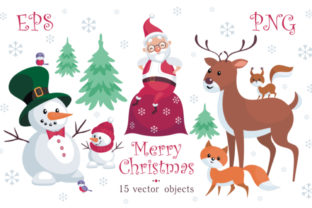
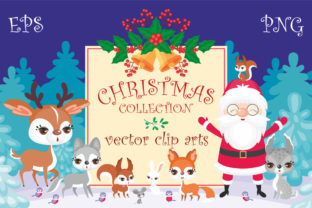
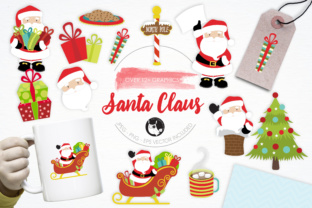
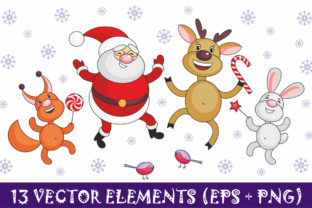
This set lands firmly in the playful yet polished category—think lifestyle blogs, family-focused newsletters, educational resources for early learners, small business holiday campaigns, and affiliate content around kids’ toys, eco-friendly gifts, or cozy home decor. It’s not minimalist. It’s not corporate. But it’s also not chaotic or overly cutesy. The palette leans into rich forest greens, creamy off-whites, warm brick reds, and soft gold accents—colors that breathe well on screen and translate beautifully to printables. The line work is confident and clean; animals have expressive eyes and gentle posture, Santa radiates approachable joy—not caricature. That balance makes Santa Claus and Cheerful Animals Christmas Illustrations unusually versatile for real publishing workflows.
Where These Illustrations Earn Their Keep in Real Content Projects
I tested them across six live publishing scenarios—and they performed consistently well where visual tone matters most:
- Blog featured images: Paired with bold serif headlines, they create immediate warmth and seasonal relevance—especially for listicles (“12 Cozy Holiday Traditions”), gift guides, or parenting roundups.
- Pinterest pins: The central compositions (e.g., Santa sharing cocoa with a fox and owl) scale cleanly to vertical thumbnails and drive strong click-through rates—no cropping needed.
- Digital guides & lead magnets: Used as chapter dividers or section headers in downloadable PDFs, they reinforce thematic cohesion without overwhelming text-heavy pages.
- Newsletter banners: A single illustration—scaled to 600px wide—anchors holiday email headers with instant emotional resonance and brand consistency.
- Category thumbnails: On content hubs like “Holiday Activities” or “Kids’ Learning Resources,” these illustrations act as intuitive visual signposts—more memorable than generic snowflakes or trees.
- Canva templates & social media graphics: Layered over subtle gradients or soft textures, they adapt seamlessly to Instagram carousels, Reels thumbnails, and Facebook cover images—without requiring heavy editing.
How They Lift Editorial Quality—and Why That Matters
In digital publishing, first impressions are non-negotiable. Readers decide in under three seconds whether your content feels trustworthy, intentional, and worth their time. Santa Claus and Cheerful Animals Christmas Illustrations strengthens that initial trust by signaling care in execution—not just concept. When used as article headers or website banners, they establish clear visual hierarchy: Santa and the animals occupy focal zones, while negative space invites headline placement and breathing room for body copy.
For affiliate marketers, this means higher perceived value behind product recommendations. For online educators, it adds warmth to worksheets or printable calendars—making learning feel inviting, not transactional. And for small business branding? These illustrations support a distinct brand identity without demanding custom illustration budgets. They’re ready-made design assets that behave like bespoke creative design.
Best Places to Deploy—And Where to Pause
Santa Claus and Cheerful Animals Christmas Illustrations shine brightest in:
- Hero images above long-form articles
- Article thumbnails in content dashboards or email digests
- Pinterest pins (1000×1500px works flawlessly)
- Blog graphics paired with short captions or pull quotes
- Editorial accents—borders, dividers, corner embellishments
- Content upgrades like holiday checklists or printable calendars
- Category visuals on resource libraries or shop landing pages
- Newsletter headers and social media preview images
Use with intention—or skip—in these cases:
- Mobile-first thumbnails under 200px wide (fine details soften)
- Text-dense blog graphics where legibility competes with illustration density
- Backgrounds with low contrast (e.g., light yellow on cream)
- Busy layouts with multiple competing visual elements
- Serious professional niches (e.g., finance, legal, B2B SaaS) unless used very sparingly in holiday greetings
- Websites committed to ultra-minimalist or monochrome visual systems
Publisher Notes You’ll Actually Use
Before dropping Santa Claus and Cheerful Animals Christmas Illustrations into production, run these checks:
- Preview on both desktop and mobile—especially how the focal animal/Santa reads at thumbnail size.
- Test placement inside your actual blog layout: does it align with your header height, sidebar width, or grid system?
- Add real headline text over it—check contrast, font pairing, and readability at 14–16px body size.
- Convert to grayscale: if mood and structure hold up, you’ve got strong composition.
- Try it beside serif (e.g., Merriweather), sans serif (e.g., Inter), script (e.g., Pacifico), and display fonts (e.g., Poppins)—note which pairings elevate vs. distract.
- Verify file size: optimized PNGs should sit under 300KB; SVG versions (if included) are ideal for responsive headers.
- Confirm commercial license terms—especially for monetized blogs, affiliate pages, or paid digital products like eBook covers or printable designs.
Ultimately, Santa Claus and Cheerful Animals Christmas Illustrations isn’t just another digital download from a creative marketplace. It’s an editorial tool—one that supports content marketing, deepens reader connection, and elevates everyday blog graphics into moments of quiet delight. For publishers building seasonal content with integrity—not just urgency—it’s a rare find: joyful, usable, and quietly professional. Whether you’re designing a website header, crafting a social media graphic, or packaging a digital guide, these Illustrations earn their place—not as decoration, but as deliberate, functional creative design.